

Wholesale Live King Crab Suppliers: How Global Seafood Buyers Can Build Reliable and Profitable Supply Chains
A missed king crab shipment rarely affects only one customer. It can delay supermarket promotions, leave restaurant menus incomplete, interrupt seafood processing schedules, and reduce distributor inventory during peak demand. For procurement managers, these disruptions translate into higher operating costs, lost revenue, and strained customer relationships.
Choosing among Wholesale Live King Crab Suppliers is therefore far more than a purchasing decision. It is a strategic supply chain investment that influences product quality, operational efficiency, customer satisfaction, and long-term profitability. Importers across the United States, the UAE, Europe, and Asia increasingly evaluate suppliers based on reliability, traceability, export capability, and production consistency rather than simply comparing quotations.
The global seafood market has become more competitive and more regulated. Buyers expect suppliers to provide premium Norwegian king crab supported by verified documentation, strict quality assurance, and dependable international logistics. Companies capable of delivering these standards consistently become valuable long-term partners rather than occasional vendors.
For seafood importers, wholesale distributors, processors, and foodservice procurement teams, selecting experienced Wholesale Live King Crab Suppliers reduces commercial risk while strengthening supply chain resilience.
What Wholesale Live King Crab Suppliers Should Actually Deliver
Professional seafood procurement extends beyond purchasing premium products. Reliable suppliers should manage every stage of the export process with consistency and transparency.
The foundation begins with responsible sourcing. Experienced suppliers work directly with licensed harvesting operations that comply with Norwegian fisheries regulations and sustainability requirements. Clear sourcing practices reduce compliance risks while improving buyer confidence.
Processing standards deserve equal attention. Premium king crab requires careful handling immediately after harvest to preserve texture, flavor, appearance, and shelf life. Modern facilities implement strict sanitation procedures, temperature monitoring, and standardized grading throughout production.
Quality assurance should be integrated into every production stage rather than limited to final inspections. Continuous monitoring helps ensure consistent sizing, accurate weights, proper packaging, and compliance with food safety requirements.
Professional export management is another essential capability. International shipments require complete documentation, including commercial invoices, packing lists, health certificates, certificates of origin, catch documentation where applicable, and destination-specific regulatory paperwork.
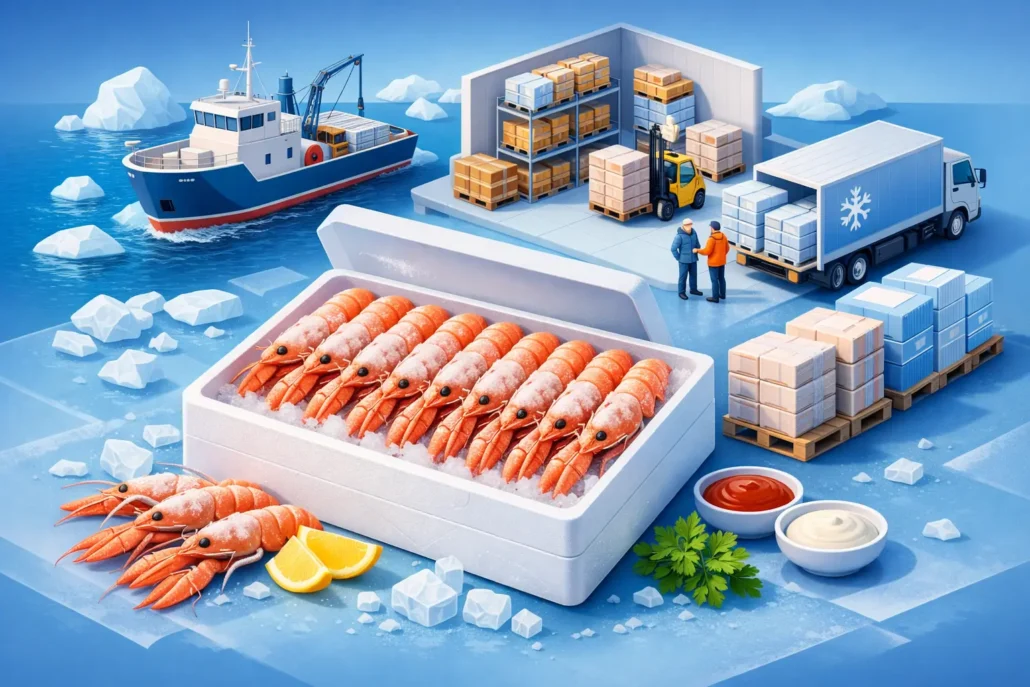
Logistics performance completes the supply chain. Whether shipping live or frozen products, maintaining uninterrupted cold-chain integrity protects product quality from the processing facility to the customer’s warehouse.
Leading Wholesale Live King Crab Suppliers combine operational discipline with export expertise, allowing buyers to focus on serving their own customers rather than solving supply chain problems.
Why Norwegian Live King Crab Remains in Demand
Norwegian seafood continues to enjoy a strong international reputation because of its consistent quality standards, responsible fisheries management, and advanced processing infrastructure.
Norway operates under one of the world’s most respected seafood management systems. Strict harvesting controls help preserve marine resources while supporting sustainable commercial production. International buyers increasingly value suppliers that can demonstrate responsible sourcing practices.
Consistency is another major advantage. Procurement teams prefer suppliers capable of delivering uniform product specifications across multiple shipments. Consistent grading simplifies inventory planning, supports retail merchandising, and improves customer satisfaction.
Export reliability also contributes to Norway’s reputation. Experienced live crab Exporters Norway understand international documentation requirements, customs procedures, and logistics planning for global seafood markets.
Modern processing facilities further strengthen Norway’s competitive position. Investment in technology, hygiene systems, cold storage, and quality management enables suppliers to maintain premium product standards throughout production.
Although seasonal demand fluctuates, established Norwegian exporters often maintain dependable production planning that supports year-round commercial relationships.
Key Buying Factors When Comparing Wholesale Live King Crab Suppliers
Comparing suppliers requires careful evaluation of operational capability rather than relying solely on pricing.
Product Specifications
Every purchase agreement should define detailed product specifications before production begins.
Specifications typically include size grading, average weight, processing methods, packaging configurations, glazing percentages for frozen products, storage temperatures, and shelf-life expectations.
Clear specifications reduce misunderstandings and improve consistency across future shipments.
Factory-Direct Sourcing
Working with a factory direct seafood supplier often improves transparency throughout the purchasing process.
Direct relationships allow buyers to communicate with production teams responsible for harvesting, processing, packaging, and quality management. Fewer intermediaries generally improve communication while reducing unnecessary delays.
Factory-direct sourcing also provides greater visibility into production capacity and scheduling.
Traceability
Traceability has become a commercial necessity rather than a regulatory requirement alone.
Reliable suppliers maintain comprehensive production records covering harvesting locations, processing dates, batch identification, packaging details, and shipment documentation.
Complete traceability simplifies product recalls if necessary while strengthening customer confidence.
Export Documentation
Documentation quality frequently determines whether shipments move smoothly through customs.
Professional seafood import supplier operations prepare export paperwork accurately before products leave the processing facility.
Buyers should verify documentation capability before committing to long-term supply agreements.
Cold-Chain Integrity
Temperature management directly affects seafood quality.
Professional exporters monitor storage conditions throughout production, warehousing, container loading, international transportation, and destination delivery.
Reliable cold-chain management protects both food safety and product value.
Supply Planning
Forecast sharing benefits both suppliers and buyers.
Long-term planning allows production facilities to schedule harvesting, processing, packaging, and shipping more efficiently.
Improved planning often leads to more consistent deliveries and fewer supply interruptions.
Production Capacity
Production capability matters particularly for supermarket chains, national distributors, and industrial seafood processors.
Suppliers should demonstrate sufficient capacity to support long-term contracts while maintaining quality standards during seasonal demand increases.
Quality Consistency
One successful shipment does not guarantee future performance.
Professional Live king crab distributors consistently deliver products matching agreed specifications throughout multiple production cycles.
Consistency reduces customer complaints, minimizes product returns, and supports stronger commercial relationships.
Why Factory Pricing Matters—but Only in Context
Procurement professionals naturally compare supplier quotations before making purchasing decisions. However, focusing exclusively on unit price can create unexpected operational costs.
International seafood procurement includes freight charges, customs clearance, duties, insurance, warehousing, inventory carrying costs, and potential quality claims.
A supplier offering a slightly higher factory price may ultimately reduce overall procurement costs through dependable logistics, accurate documentation, and consistent production quality.
Shipment delays frequently create larger financial losses than modest price differences. Missed promotional campaigns, emergency purchasing, inventory shortages, and production interruptions all increase total landed cost.
Reliable Wholesale Live King Crab Suppliers help buyers minimize these hidden expenses through operational consistency rather than aggressive pricing alone.
Successful procurement teams therefore evaluate suppliers based on total commercial performance instead of simply selecting the lowest quotation.
How Different Buyers Evaluate Wholesale Live King Crab Suppliers
Different customer segments measure supplier performance using different commercial priorities.
Supermarket procurement managers prioritize consistent sizing, attractive presentation, dependable packaging, and uninterrupted product availability. Retail promotions depend on predictable deliveries.
Restaurants emphasize freshness, premium appearance, and reliable scheduling. Chefs require confidence that today’s shipment matches previous deliveries.
International seafood importer organizations evaluate customs documentation, regulatory compliance, shipping reliability, and communication throughout transportation.
Wholesale seafood distributor businesses focus on inventory turnover, replenishment reliability, packaging efficiency, and product consistency that supports multiple downstream customers.
Seafood processors examine production yield, meat recovery, uniform grading, and raw material consistency because these directly influence manufacturing efficiency.
Professional wholesales king crab supplies providers understand these varying priorities and adapt their commercial support accordingly.
Warning Signs of Unreliable Suppliers
Experienced procurement professionals identify supplier risks before signing contracts.
Unclear product origin should immediately raise questions. Suppliers unable to verify harvesting locations or sourcing practices increase regulatory and reputational risk.
Incomplete documentation presents another concern. Missing certificates or inaccurate paperwork frequently delays customs clearance and increases storage costs.
Inconsistent product specifications often indicate weak production controls. Significant variations in size, weight, packaging, or processing quality create operational challenges for buyers.
Communication quality also deserves careful evaluation. Professional suppliers provide timely updates regarding production schedules, shipment status, documentation progress, and potential delays.
Heavy dependence on intermediaries can further complicate procurement. Buyers sometimes discover that the company issuing quotations neither processes nor exports seafood directly.
Experienced Exporters Live king crab distinguish themselves through transparent communication, documented production capability, and consistent operational performance.
Why Long-Term Partnerships Outperform Spot Buying
Spot purchasing occasionally offers attractive pricing opportunities. However, most international seafood businesses achieve better financial results through strategic supplier partnerships.
Long-term relationships improve production planning because suppliers can allocate harvesting schedules, factory capacity, packaging materials, and shipping resources more efficiently.
Forecast sharing strengthens inventory management on both sides of the supply chain. Buyers reduce stock shortages while suppliers optimize production utilization.
Pricing stability represents another important benefit. Although seafood markets naturally fluctuate, established commercial relationships often reduce short-term volatility.
Communication also improves over time. Both organizations gain a deeper understanding of operational requirements, allowing faster resolution of unexpected challenges.
For buyers placing recurring Live king crab orders, consistent partnerships generally deliver greater commercial value than repeated spot-market negotiations.
Building Supply Chain Resilience Through Strategic Seafood Sourcing
Global seafood procurement has become increasingly complex. Regulatory requirements continue to evolve, logistics networks face periodic disruptions, and customer expectations for quality continue to rise.
Professional seafood sourcing therefore requires more than identifying available inventory. Buyers should evaluate supplier experience, operational systems, documentation capability, processing standards, and long-term production planning.
Reliable fresh live crab supplier operations invest continuously in quality management, employee training, processing technology, and export expertise. These investments support consistent commercial performance even during changing market conditions.
Companies operating as both frozen seafood exporter and live seafood specialists often possess broader logistics experience that strengthens supply chain flexibility for international customers.
Increasingly, procurement managers view supplier selection as a strategic business decision rather than a transactional purchase.
Companies such as Aschums Seafood build their model around factory-direct sourcing, premium Norwegian seafood, and export-ready logistics. This reflects a broader industry shift toward integrated supply partnerships built on transparency, consistency, and operational excellence rather than short-term pricing.
Conclusion
Selecting dependable Wholesale Live King Crab Suppliers requires evaluating much more than product availability or factory pricing. Successful procurement decisions consider sourcing practices, production capability, documentation accuracy, quality assurance, cold-chain management, and long-term commercial reliability.
International seafood buyers operate in highly competitive markets where supply disruptions quickly affect customer satisfaction and profitability. Suppliers capable of delivering consistent quality, verified traceability, export-ready documentation, and dependable communication provide measurable business value throughout the supply chain.
Whether purchasing for supermarkets, foodservice operators, seafood processors, wholesale distributors, or international import companies, supplier reliability consistently outweighs the lowest quotation. The strongest procurement outcomes come from Wholesale Live King Crab Suppliers that combine premium Norwegian seafood with disciplined operations, transparent sourcing, and dependable export execution.